Tree Removal in Jonesboro AR
Free Instant Quote!
Jonesboro Tree Service Pros provides residential and commercial tree removal throughout Jonesboro, AR and the surrounding Craighead County area. We handle the full removal process from initial assessment through final cleanup — including dead and dying trees, storm-damaged trees, diseased trees, and healthy trees that have outgrown their location and now pose a risk to homes, fences, vehicles, or utility lines. Our crew is licensed and insured, uses professional rigging and felling equipment, and includes complete debris removal with every job. Whether you have a single problem tree in a tight backyard or multiple trees that need to come down on a larger property, we provide a free on-site estimate before any work begins.
The Step-by-Step Process Behind Professional Tree Removal
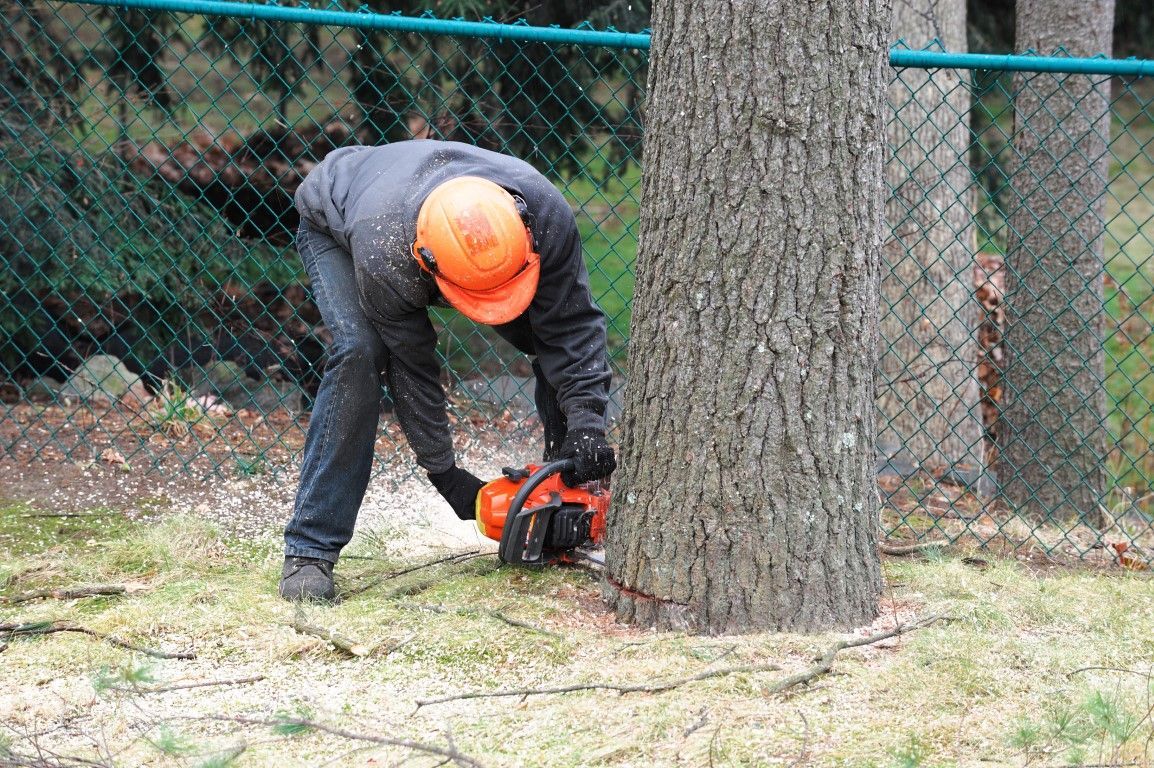
Professional tree removal is more than cutting down a tree — it is a controlled process designed to drop the tree without damaging anything around it. The job begins with an on-site assessment of the tree's lean, weight distribution, root condition, and proximity to structures, fences, power lines, and other vegetation. Based on that assessment, we determine the appropriate removal method. For trees in open areas with a clear fall zone, we use directional felling — making precise notch and back cuts that drop the tree exactly where we plan. For trees positioned near homes, fences, vehicles, power lines, or other trees we want to preserve, we use sectional removal: climbing the tree, removing it in pieces from the top down, and using rigging ropes to control the descent of each section. After the tree is on the ground, we cut the trunk and large limbs into manageable pieces, run smaller branches through a wood chipper, and either haul everything off the property or stack it at the curb based on your preference. Stump removal is a separate service we can include or schedule afterward. The entire process is designed to leave your property cleaner than we found it, with no remaining hazards.
Should My Tree Be Removed or Can It Be Saved?
Removal is the right service when a tree cannot be saved through trimming, treatment, or structural support — or when the tree's location creates a risk that cannot be addressed any other way. The most common reasons Jonesboro homeowners call us for removal are: a tree has died from disease, drought stress, or pest damage and is now standing dead on the property; a tree was damaged during a storm and is structurally compromised, even if it is still standing; a tree has developed a noticeable lean that has gotten worse over recent seasons; a tree is showing visible signs of decay including hollow trunk areas, large dead branches, or fungal growth at the base; a tree has grown into a position where it is now contacting a roofline, fence, or utility line; or a tree is too close to the foundation of the home and roots are starting to cause damage. Removal is also frequently needed during land clearing for construction, additions, or major landscape changes. If you are not sure whether a tree needs to be removed or can be saved through other means, we provide an honest assessment during the estimate visit.
Common Causes of Tree Decline in Northeast Arkansas
Several conditions specific to Northeast Arkansas push trees in Jonesboro toward removal more often than in other regions. Pine bark beetle infestations are a recurring problem across Craighead County — once a beetle population establishes in a stressed pine, the tree typically dies within a single growing season and must be removed before it falls or spreads the infestation to neighboring trees. Oak wilt and other fungal diseases attack the vascular systems of native oaks, often killing trees that appear healthy until late in the disease progression. Jonesboro's clay-heavy soils retain water poorly during drought and become saturated during heavy rain events — both extremes stress root systems and reduce a tree's anchoring strength over time. Tornado activity, straight-line winds, and ice storms regularly damage trees beyond what trimming can correct, leaving split trunks, broken leaders, or structural cracks that make a tree unsafe to leave standing. Even healthy trees can outgrow their location: a sapling planted 25 years ago directly next to a house may now have a 60-foot canopy hanging over the roof and a root system encroaching on the foundation. Understanding why removal becomes necessary helps homeowners plan ahead and avoid emergency situations.
Can You Take Down a Tree That's Right Next to My House?
The most demanding tree removal jobs in Jonesboro are not the largest trees — they are the trees positioned closest to something we cannot afford to damage. A 70-foot oak in an open field is straightforward. The same oak with branches over a roof, a fence on one side, and a power line on the other requires a completely different approach. For these jobs we use sectional removal with controlled rigging. A climber ascends the tree using ropes and a saddle, working from the top down. Smaller branches are cut and either lowered with rigging lines or dropped into a designated landing zone. Larger branches and trunk sections are tied off with rigging ropes anchored to other points in the tree or to ground anchors before being cut, allowing the ground crew to control the descent and lower each piece exactly where it needs to land. This method takes significantly more time than felling a tree in one cut, but it eliminates the risk to surrounding structures. We use this approach for any tree where a controlled drop is not feasible — which in Jonesboro's residential neighborhoods is the majority of the trees we remove.
What Drives the Cost of a Tree Removal Quote
Tree removal pricing varies significantly based on factors specific to each job, which is why we provide a free on-site estimate rather than quoting over the phone. Tree height and trunk diameter are the primary variables — a 30-foot tree with an 8-inch trunk takes a fraction of the time and equipment to remove compared to a 70-foot tree with a 30-inch trunk. Location on the property matters as much as size: a tree in an open backyard with clear fall space is the lowest cost scenario, while the same tree positioned over a roof or against a fence line requires sectional removal that adds time, labor, and rigging equipment. Tree condition affects pricing both ways — a structurally sound tree is more predictable to remove, while a heavily decayed or storm-damaged tree may require additional precautions that increase cost. Site access affects equipment options: properties with narrow gates, low overhead clearance, or limited driveway space may require smaller machinery or more hand work. Debris handling is the final variable — full haul-off costs more than stacking the wood at the curb for the homeowner to handle. We walk through all of these factors during the estimate so you understand exactly what is driving the price.
Cleanup and Site Restoration After Tree Removal
A complete tree removal job does not end when the tree hits the ground — and a thorough cleanup is what separates a professional removal from a partial job. After the tree is down, we section the trunk and large limbs into manageable pieces, run smaller branches and brush through a wood chipper, and remove or stack the wood based on what you want done with it. Some homeowners want all debris hauled off the property; others want firewood-sized rounds left for personal use; some want chips spread as mulch. We accommodate any of those preferences. The remaining stump can be ground down at the same visit or scheduled separately — most homeowners include stump grinding with the removal because it eliminates a return trip and keeps the property from sitting with a fresh stump while waiting for follow-up work. We also rake the work area, blow off driveways and walkways, and confirm no debris has been left in flowerbeds or surrounding landscaping before we leave. The goal is for the property to look clean and finished, not like a tree was just removed there an hour ago.
Tree Removal Service Coverage Beyond Jonesboro
Our tree removal service area covers Jonesboro, AR and all of NEA. We handle removals on residential lots, commercial properties, rural acreage, and properties under active development throughout Craighead County and beyond. The mix of tree species across our service area — water oaks, willow oaks, sweet gums, loblolly pines, Bradford pears, and various ornamentals — means every removal job is different, and we adjust our approach based on the species, condition, and location of the tree. If you are located outside these communities but in the broader Northeast Arkansas region, call us with your address and we will confirm whether we can accommodate the job.
FAQs — Tree Removal in Jonesboro, AR
How much does tree removal cost in Jonesboro?
Describe the item or answer the question so that site visitors who are interested get more information. You can emphasize this text with bullets, italics or bold, and add links.Do I need a permit to remove a tree on my property in Jonesboro?
For most residential tree removal on private property within the Jonesboro city limits, a permit is not required. Permit requirements can come into play for trees in public right-of-way areas, in certain regulated zoning districts, or as part of larger development projects. We review the specifics with you during the estimate so there are no surprises before work begins.
Will you handle the stump too, or is that a separate service?
Stump grinding is a separate service that we frequently combine with tree removal. Most homeowners include it because handling both at the same visit saves a return trip and avoids leaving a fresh stump sitting in the yard. If you would rather skip the stump for now or handle it later, we can leave it as-is — but we will let you know what we recommend based on the location and how you plan to use the area.
How long does a tree removal take in Jonesboro?
Most single-tree residential removals are completed in a single day, often within a few hours from start to cleanup. Larger trees, multi-tree jobs, or removals that require sectional work near structures take longer — sometimes a full day or two depending on complexity. We give you a realistic time estimate during the on-site quote so you know what to expect on the day of service.
Will my homeowners insurance pay for tree removal in Jonesboro?
Coverage depends on your specific policy and the cause of the removal. Most homeowners insurance policies in Arkansas cover tree removal when a tree has fallen onto a covered structure — a roof, garage, fence, or vehicle under a covered structure — typically up to a per-tree or per-incident limit. Removal of a tree that simply died of disease or age is usually not covered. After storm damage, we provide full documentation and photographs to support your insurance claim, and we can work directly with your adjuster if needed.
Can you remove trees that are touching power lines?
We do not work on trees or branches that are in direct contact with energized utility lines — that work is coordinated through the utility provider. We can remove or trim trees and branches that are growing toward power lines but have not yet made contact, which is the safest time to address that situation. If a tree on your property is currently entangled with utility lines, call us and we will coordinate the necessary steps with the utility company.