24/7 Emergency Tree Service in Jonesboro AR
Free Instant Quote!
When a tree falls on your home, blocks your driveway, or is leaning dangerously against a structure after a storm, you need a crew that can respond the same day — not a scheduled appointment three days out. Jonesboro Tree Service Pros provides 24/7 emergency tree service throughout Jonesboro, AR and the surrounding Craighead County area for homeowners and property managers dealing with fallen trees, storm-damaged limbs, uprooted trees, and hazardous situations that cannot wait. We are licensed and insured, arrive equipped to assess and remove the hazard safely, and document all damage for homeowners who need to file an insurance claim.
What Emergency Tree Service in Jonesboro Involves
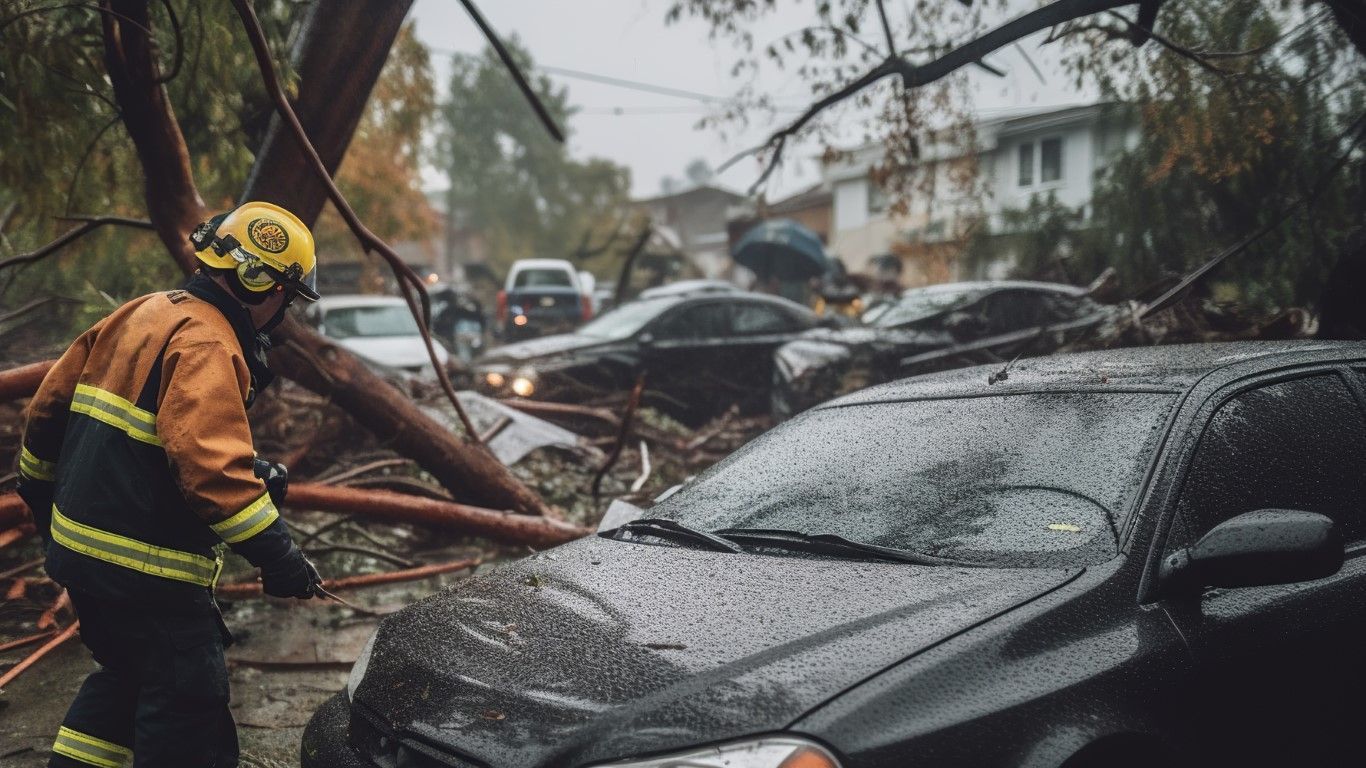
Emergency tree service covers situations where a tree or large limb has already caused damage or is actively threatening a structure, vehicle, utility line, or access point on your property. When we arrive on site, the first step is assessing the tree's position, structural condition, and tension — particularly for trees that have partially fallen or are leaning hard against a wall or roof. A tree still under tension can shift unpredictably during removal, and approaching it without that assessment increases the risk of making the damage significantly worse. Once we understand the situation, we determine the safest extraction method: full felling for trees in open areas, or sectional removal with rigging for trees near structures where a controlled approach is required. After the tree is removed, we clear all debris from the property and document the work for insurance purposes if needed. We do not leave a job site until the immediate hazard is resolved.
When You Need Emergency Tree Service in Jonesboro
Emergency tree service is the right call when the situation creates an immediate safety risk or is actively causing property damage. In Jonesboro, the most common emergency scenarios follow severe thunderstorms, straight-line wind events, tornado activity, and winter ice storms — all of which occur regularly across Jonesboro throughout the year. You need emergency tree service when a tree or large limb has fallen onto a roof, fence, vehicle, or outbuilding; when a tree is leaning against a structure after a storm and was not leaning before; when a large branch is hanging partially broken and suspended above a walkway, driveway, or occupied area; when a tree has been struck by lightning and the structural integrity is uncertain; or when a fallen tree is blocking driveway access or a public road. If you are unsure whether your situation qualifies as an emergency, call us — we will ask a few quick questions and give you an honest answer about how urgent the response needs to be.
Why Trees Fail Suddenly in Jonesboro, AR
Most emergency tree situations in Jonesboro are not random events — they are the result of conditions that have been developing for weeks, months, or longer before the actual failure occurs. Jonesboro's clay-heavy soils retain moisture during heavy rain events, which saturates the root zone and dramatically reduces the anchoring strength of a tree's root system. A tree that has stood firmly for years can become unstable after a prolonged wet period and fail in the next wind event at speeds that would not have moved it before. Fungal root rot, which is common in Northeast Arkansas's humid climate, attacks the structural roots from the inside without showing visible symptoms above ground until the tree is already seriously compromised. Ice accumulation during winter storms adds hundreds of pounds of weight to canopy branches not designed to carry that load, causing sudden limb failure and full tree splits. Lightning strikes can hollow out or fracture a trunk internally while leaving the tree standing and appearing intact. Understanding why failures happen helps homeowners recognize warning signs earlier — before the situation becomes an emergency call at 2 in the morning.
Warning Signs That Require an Urgent Call
Not all emergency tree situations start with a tree already on the ground. Several warning signs indicate that a tree is approaching failure and should be assessed immediately rather than monitored and hoped for. A tree that has developed a noticeable lean that was not present in prior seasons — especially one leaning toward a structure, driveway, or power line — has likely experienced root destabilization or internal trunk decay that is not visible from the outside. Soil that is lifting or cracking around the base of a tree after rain indicates the root system is shifting, which is a direct precursor to uprooting. Fungal growth, mushrooms, or soft spongy material appearing at the base of the trunk or on major surface roots signals active decay in the root system or trunk base. Large dead branches on an otherwise living tree — particularly branches that are brittle, bark-shedding, or hollow — can drop without warning in any wind event above a light breeze. A trunk with visible vertical cracks, splits, or cavities large enough to see into indicates internal structural failure that makes the tree a serious risk. If any of these signs are present on a tree near your home, vehicle, or frequently used outdoor area, call us for an assessment before it becomes a same-day emergency.
What Affects the Cost of Emergency Tree Service in Jonesboro
Emergency tree service costs more than a scheduled removal for several reasons that are specific to the nature of the work. Response time is a factor — calls that come in overnight or during active storm events require crew mobilization outside of standard working hours. Tree position is the largest cost variable: a tree lying in an open yard is straightforward to clear, while a tree that has fallen through a roof, landed across a fence line, or is wedged against a structure requires careful sectional extraction that adds significant time and labor. Tree size directly affects how long removal takes and how much debris needs to be hauled. Access to the work site matters as well — properties with narrow gates, low clearance, or limited equipment access require smaller machinery or more hand work, both of which increase the time on site. We provide a free on-site assessment and quote before any work begins, so you know the cost before committing. For homeowners with homeowners insurance, tree removal following storm damage is frequently a covered expense — we provide full documentation to support that claim process.
How We Help With Insurance Claims After Storm Damage
Many Jonesboro homeowners are not familiar with how tree damage insurance claims work, and that uncertainty can slow down the reimbursement process significantly. Standard homeowners insurance policies in Arkansas generally cover the cost of removing a tree that has fallen onto a covered structure — a roof, fence, attached garage, or vehicle under a covered structure. Coverage for a tree that fell in an open yard without hitting a structure varies by policy. When we arrive for an emergency call, we photograph the site before any work begins, document the condition of the tree and the damage caused, and provide a written record of the work completed. This documentation is exactly what insurance adjusters need to process a claim. We can also work directly with your adjuster if they need additional information about the removal. If you are unsure what your policy covers, contact your insurance provider before authorizing work — we can hold off on non-urgent portions of a job while you confirm coverage.
FAQs — Emergency Tree Service in Jonesboro, AR
How quickly can you respond to an emergency tree call in Jonesboro?
We answer emergency calls 24 hours a day, seven days a week. Response time depends on how many active calls we have at the time — during widespread storm events across Craighead County, multiple properties may be queued ahead of yours. We prioritize situations where a tree is actively on a structure, blocking emergency vehicle access, or creating an immediate life-safety hazard. Calling us directly gives you the fastest response — do not submit a web form during an active emergency.
Will you work on trees that are touching or near power lines?
We do not work on trees or branches that are in direct contact with energized power lines — that work must be coordinated through the utility provider. However, we can safely remove or trim trees and branches that are near lines but not yet in contact, which is the safest and most cost-effective time to address that situation. If a tree has already fallen across a power line on your property, call us and we will assess what we can safely do while coordinating with the utility company for the portion involving live lines.
What if the tree only partially fell and is still leaning on my roof?
A partially fallen tree resting on a structure is one of the most common and most important emergency situations we handle. The tree is still under significant tension and weight, and removing it incorrectly can cause additional structural damage to the roof during extraction. We assess the lean, weight distribution, and contact points before beginning removal, and we use rigging to control the tree as it comes off the structure rather than simply cutting and letting it fall. Do not attempt to remove a tree that is resting on your roof without professional equipment and experience.
Do you clean up all the debris after an emergency removal?
Yes. Every job we complete includes full debris removal before we leave the property. Wood, limbs, and brush are hauled away or stacked at the curb based on your preference. We do not leave a job site with debris scattered across the yard or blocking access.
Can you help if the emergency happens on a weekend or holiday?
Yes. Our emergency line is active every day of the year including weekends and holidays. Tree emergencies do not follow a business calendar, and neither do we. Call (870) 860-2701 any time for emergency assistance in Jonesboro and the surrounding area.